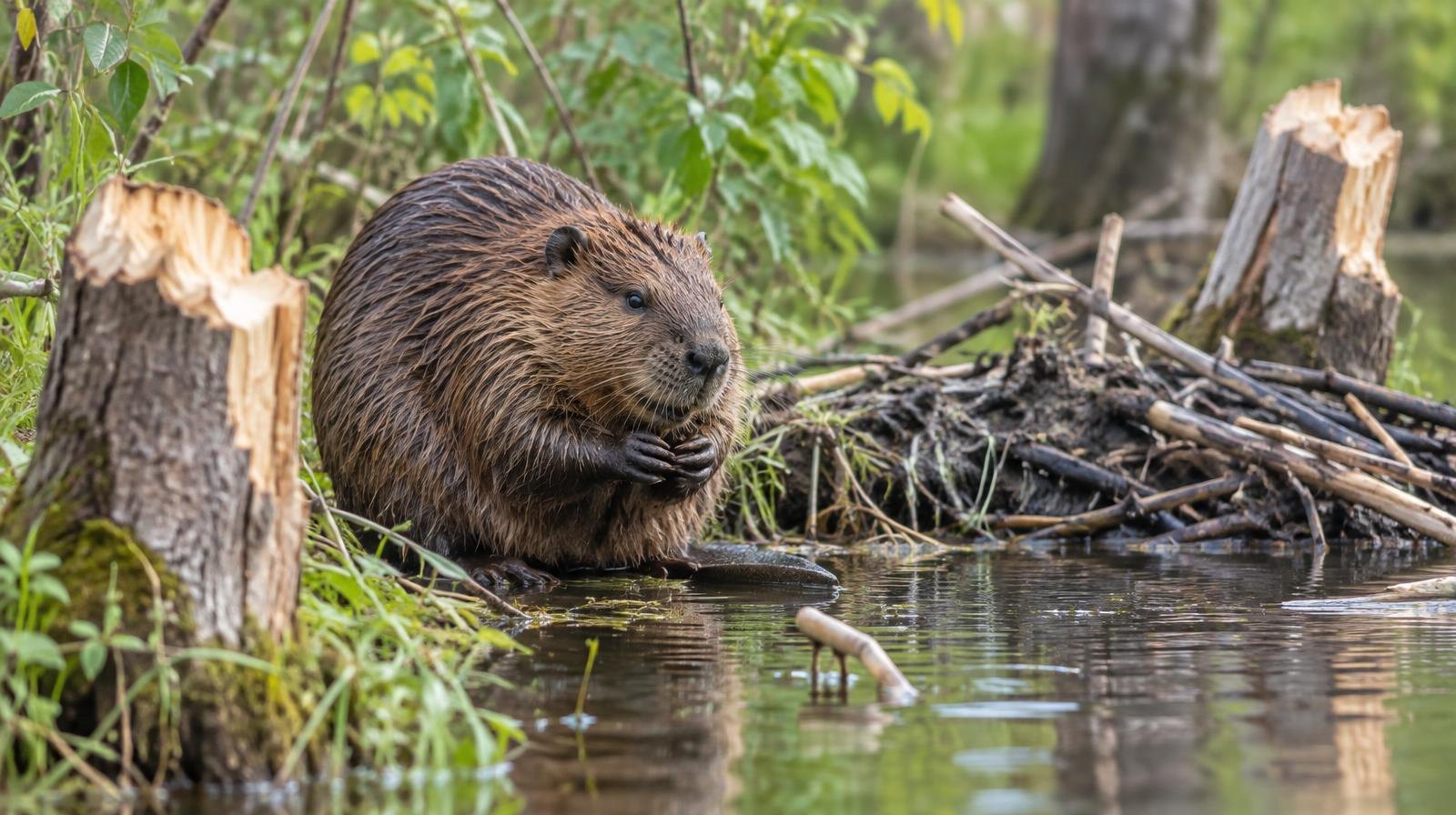
Fanno Creek in Beaverton is one of three sites in a new Portland State University study examining how urban residents feel about sharing their neighborhoods with beavers.
The study, reported by OPB on Nov. 9, surveyed nearly 200 people who live or recreate near three Tualatin River watershed locations: Springville Creek in Portland, Fanno Creek in Beaverton and Chicken Creek near Sherwood.
Researchers asked participants about their attitudes toward urban beavers and what management practices they support for coexisting with the animals.
Matt Guziejka, an environmental researcher at Portland State University, is the study's lead author.
The research comes after a 2023 Oregon law, House Bill 3464, that took effect in July 2024. The law changed the beaver's classification from "predator" to "furbearer," meaning private landowners can no longer kill a beaver for being a nuisance, damaging trees or causing flooding.
The Oregon Department of Fish and Wildlife (ODFW) now requires landowners to get a permit for beaver removal and encourages non-lethal strategies first, as OPB reported, citing the Oregon Capital Chronicle, in June 2024.
Those strategies include placing fences and barriers around trees, applying repellent and choosing different plant species, according to Michelle Dennehy, an ODFW spokesperson quoted in that coverage.
All beaver removals, permitted or exempt, must now be reported to ODFW.
The question of how to live alongside beavers is personal for Beaverton. The city's name traces to the Indigenous Atfalati people, who called their village along Fanno and Beaverton Creeks "Chakeipi," meaning "Place of the Beaver," according to Clean Water Services.
Early white settlers called the area "Beaver Dam" before it became Beaverton.
Beavers are active across the Tualatin Basin. A partnership between the Tualatin River Watershed Council, the Tualatin Soil and Water Conservation District, Clean Water Services and the Wetlands Conservancy is working on a basin-wide beaver strategy to address the animals' effects on public and private property.
Clean Water Services partnered with the United States Geological Survey (USGS) on a multiyear study of beavers in urban areas of the Tualatin River Watershed.
That research found local beavers have built more dams along smaller, slower creeks than on the Tualatin River itself. Most of the watershed can support more dams than currently exist, according to Clean Water Services, but fast-moving water, lack of food, human intervention and natural predators may be limiting dam construction.
Beaver dams slow water flow and allow sediment to settle, improving water clarity, according to Clean Water Services. Dams can also reduce bank erosion, improve salmon habitat and raise the water table, according to ODFW. But beavers can cause flooding and damage trees.
That tension is playing out along Fanno Creek downstream of Beaverton. Near the Tigard Public Library, a beaver dam transformed a stretch of creek into something like a marsh over the past two years, Tigard Life reported on Oct. 31.
Rather than fight the beaver, the Tualatin Riverkeepers secured a $5,000 Tualatin Watershed Improvement Grant to build on the habitat the animal created.
Tigard Mayor Yi-Kang Hu, who volunteered at the site, told Tigard Life the city was looking to find the "right balance" between beavers and residents.
Specific findings from the PSU study were not available at publication.
Upcoming
- The Tualatin Riverkeepers' Fanno Creek restoration project near the Tigard Public Library is slated for completion in February 2027.