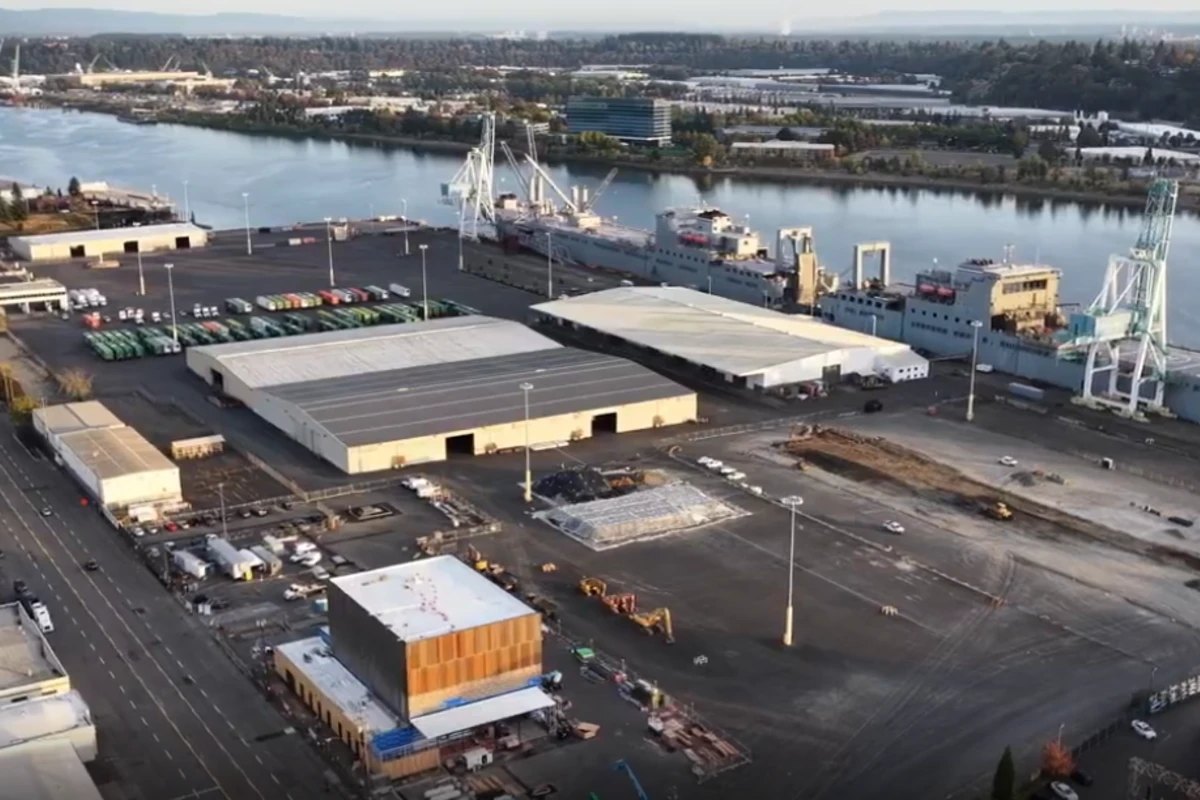
Metro launched an interactive map of more than 16,000 industrial tax lots across the greater Portland region in November as part of an effort to identify land that could support future business development and job growth.
The tool, called the Industrial Land Explorer, allows local governments, businesses, developers and community members to explore industrial properties by size, slope, ownership and environmental and regulatory factors. The inventory does not mean every listed property is vacant or ready for development.
Metro developed the tool in response to what the agency describes as consistently slow job growth in the region. The effort has a direct Beaverton-area connection through state Rep. Hai Pham, a Democrat representing south Hillsboro, west Beaverton and unincorporated Washington County.
In a press release announcing the Oregon JOBS Act, Pham described advanced manufacturing as "the economic engine for the state."
"Biotechnology, semiconductors, food manufacturing, and high-wage jobs are only made possible with bold, collaborative, and strategic action," Pham said.
Regional job growth lags
Greater Portland recorded negative 1.5% job growth over the past year, the second-worst rate among large urban areas behind Washington, D.C., according to Metro. The agency said high housing and business costs have made the region less competitive.
"This tool is an extraordinary resource. By making information publicly available, we open important conversations on available land and what we want to see in our communities," Metro Council President Juan Carlos González said. "I hope the region as a whole can use the Industrial Land Explorer and its data to inform our region's economic policy."
The Industrial Land Explorer is the first deliverable of Metro's Job Ready Lands project, which began Nov. 3 and has an estimated completion date of July 30, 2027.
The project aims to identify three to six industrial sites where public investment could make the biggest difference, then develop plans to prepare those areas for business activity.
State funding and legislation
Metro's Job Ready Lands effort aligns with a recommendation from the Governor's Prosperity Council to allocate $250 million every two years to connect potential development areas to utilities and transportation. The recommendation is not an approved state funding allocation.
Gov. Tina Kotek created the council in January 2026 to address Oregon's economic challenges.
A technical working group of city industrial specialists, economic development professionals and business and nonprofit representatives is developing criteria to prioritize sites. Metro's timeline calls for the group to develop recommendations between November 2026 and March 2027, with Metro Council endorsement targeted for March through May 2027.
Separately, state Sen. Janeen Sollman, a Hillsboro Democrat, introduced the Oregon JOBS Act, Senate Bill 1586, in January 2026. The proposal included bringing a single industrial site in North Hillsboro, south of Highway 26, into the urban growth boundary for advanced manufacturing and supply chain uses. It would have prohibited stand-alone data centers on the site.
The bill did not advance out of committee before the 2026 legislative session ended. It was separate from Metro's Job Ready Lands project.
The Senate Majority Office's announcement said advanced manufacturing jobs carry a median annual wage of about $65,000 in Oregon.
Residents interested in the Job Ready Lands project can contact Metro Senior Planner Jaye Cromwell at [email protected].