The number of days children breathe wildfire smoke at school has nearly eightfold since 2006, according to a new Oregon State University study that raises pointed questions about air quality inside Beaverton School District buildings.
The study, first reported by the Oregon Capital Chronicle, found that the average number of annual smoke days at U.S. public schools rose from 6.8 to 54.4 over a 17-year span ending in 2023. Childcare centers saw an even steeper climb, going from 9.4 to 112.2 smoke days per year.
"Our children are collectively experiencing billions of days of smoky air each year," said Molly Kile, a lead researcher and environmental epidemiologist at Oregon State.
The findings land in a state where wildfires scorched 2.5 million acres during summer 2026, breaking the previous record of 1.9 million acres set in 2024, according to the Oregon Department of Forestry.
Some schools worse inside than out
Staying indoors does not guarantee cleaner air, Kile said. Indoor air quality varies depending on how well a building shields occupants from outdoor pollution.
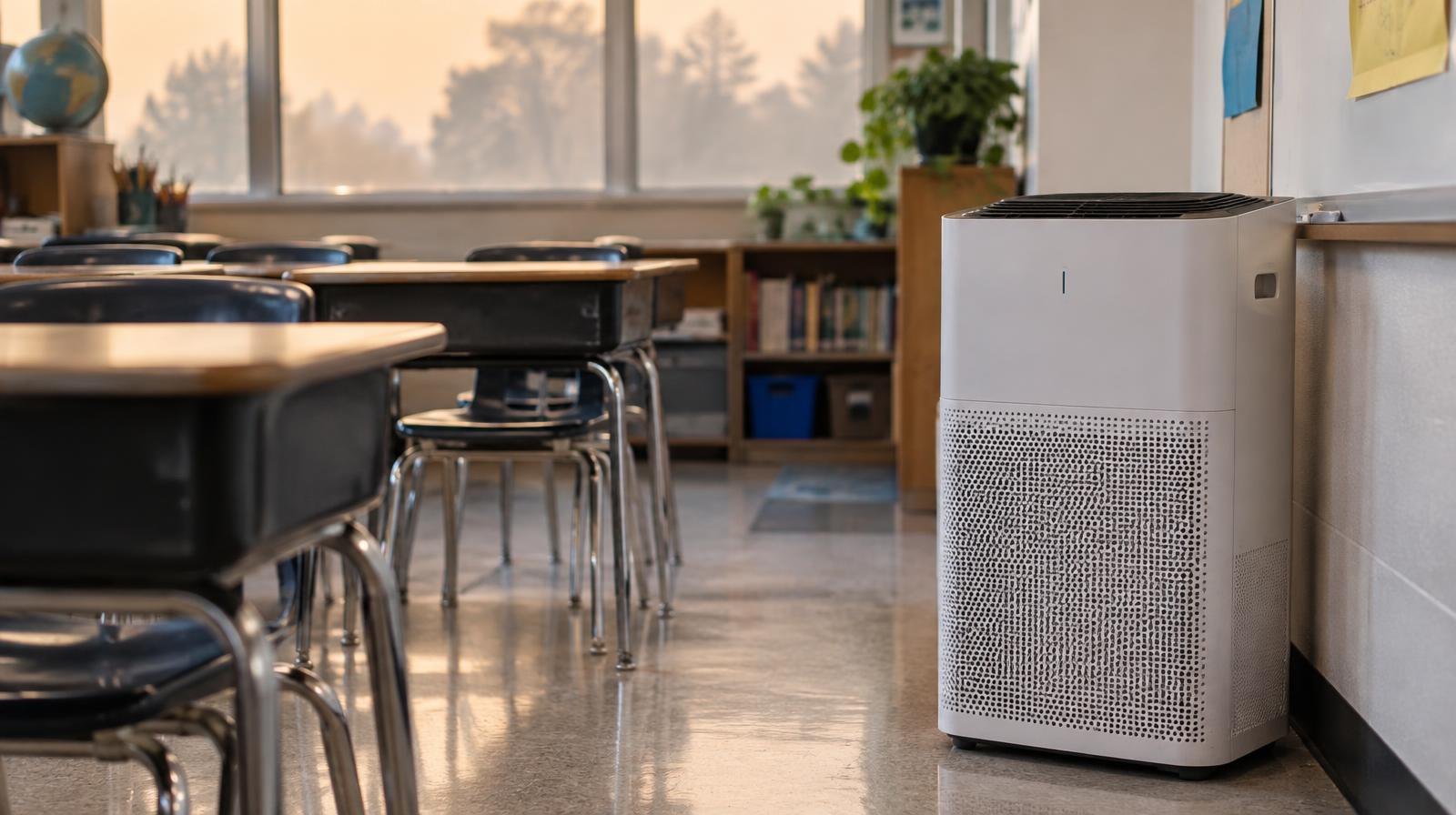
"Some schools had higher indoor PM2.5 concentrations than nearby outdoor measurements during smoke days," Kile said. She called the finding "particularly actionable" and said it "emphasizes the need for investment in improving indoor air quality in schools through HVAC upgrades, which can be expensive, or portable HEPA filters, which can be a more affordable approach."
PM2.5 refers to fine particulate matter small enough to reach deep into the lungs and enter the bloodstream. It is a known cause of cardiovascular disease and is linked to respiratory illness, according to the study. Wildfires account for almost half of all PM2.5 across the country.
Children under 18 are among the groups most sensitive to smoke exposure, according to Oregon's Wildfire Response Protocol for Severe Smoke Episodes, maintained by the Oregon Department of Environmental Quality.
BSD upgrading two high schools
Beaverton School District has been upgrading HVAC systems at Aloha High School and Sunset High School using 2022 bond funds. The Aloha project spanned two summers. Crews began the first phase in summer 2025, closing large sections of the school and exposing pipes and ceilings in hallways and classrooms, according to the district's bond program page. The second phase took place during summer 2026.
At Sunset High School, the district completed the first part of its own HVAC upgrade during summer 2026.
Whether those new systems include filtration rated to remove ultrafine smoke particles is not clear from public bond documents. The district has not publicly responded to the OSU study's findings.
Open questions for the district
Stephanie Foster, program manager at Samaritan Health Services' Research Development Office and the study's corresponding author, said schools are well-positioned to act.
"Educational facilities are places where coordinated preparedness plans, air filtration, indoor air quality monitoring and changes to activities during smoke events could reduce exposure," Foster said.
Under Oregon's statewide wildfire smoke protocol, school districts are listed as participating local agencies. Their designated role during unhealthy or hazardous smoke levels is to determine whether student health is at risk and decide whether to modify, cancel or close school activities.
The district's job description for its manager of risk management lists indoor air quality compliance among that position's responsibilities. But no public record in the available documents shows whether BSD has a formal smoke-response plan, conducts indoor air quality monitoring, or has deployed portable HEPA filters in classrooms beyond the two high school HVAC projects.