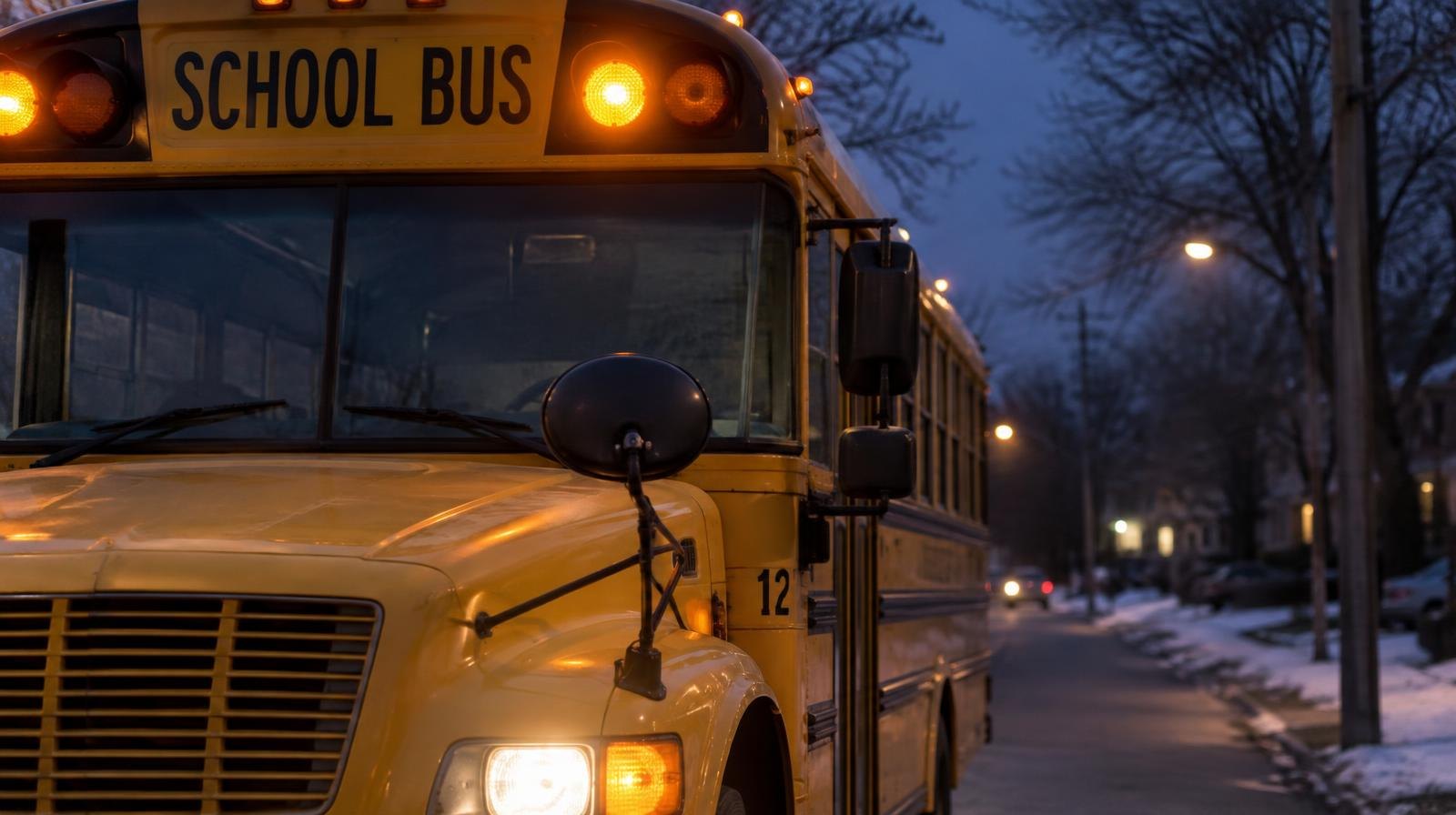
Permanent daylight saving time would add roughly 21 million dark morning school commutes each year in Oregon, according to a University of Washington study published Oct. 29.
The finding lands close to home for Beaverton School District families. BSD's earliest programs, ACE and CTP, start at 7:15 a.m., and 20 early-start elementary schools begin at 7:45 a.m., according to the district's bell schedule. Students in those programs would be heading to school well before sunrise on winter mornings under permanent DST.
Oregon is one of 19 states that have enacted legislation to make daylight saving time permanent, according to a Congressional Research Service report updated in July. That law cannot take effect unless Congress acts. The U.S. House passed the Sunshine Protection Act (H.R. 139) on July 14, 2026. The bill awaits Senate action.
What the study found
Researchers analyzed 16,093 schools across 14 of the 19 states with permanent DST laws, including Oregon. Using each school's actual start time, enrollment and geographic coordinates, they calculated how many student trips would happen before sunrise under three scenarios: permanent DST, the current clock-switching system and permanent standard time.
Oregon's numbers, drawn from the study's data table: under the current system, the state sees about 8.4 million child-days of pre-sunrise school travel per year.
Permanent DST would push that to about 29.3 million. That is a calculated increase of roughly 20.9 million additional dark commutes.
Nationally, the researchers estimated permanent DST would impose 2.14 billion more dark morning commutes each year, assuming an 8 a.m. departure from home.
"It's called the 'Sunshine Protection Act' because you get an extra hour of light at the end of the day. But you will take that hour from the morning. You could call it the Sunshine Destruction Act," Horacio de la Iglesia, UW professor of biology and the study's senior author, told Koin 6.
Safety risk doubles in the dark
The researchers also examined federal crash data from 2015 through 2024. Among morning crashes during the school year, the odds that a crash involved a school-age pedestrian (ages 5 to 18) were about twice as high before sunrise as after, with an adjusted odds ratio of 2.22.
The study warned that permanent DST would effectively undo the benefits of delayed high school start times, which are designed to align with teenagers' shifting circadian rhythms. BSD's high schools start at 8:55 a.m., and middle schools at 9:40 a.m.
Early starts put BSD kids at higher risk
The study found that communities on the western edge of their time zones and those with early school start times would be hit hardest. Oregon sits at the western edge of the Pacific time zone, spanning roughly 117 to 124 degrees west longitude.
Lead author Guadalupe Rodríguez Ferrante, a UW postdoctoral scholar in biology, said the 2.14 billion national figure is likely an undercount. "For the estimation, we assumed students would be leaving home around 8 a.m.," Rodríguez Ferrante told Koin 6. "That's pretty late, so our calculation … is likely an underestimation of the real number."
BSD's 20 early-start elementary schools, including Aloha-Huber Park K-8, Beaver Acres, Bethany, Hiteon, Sato and others, begin at 7:45 a.m. Students arriving for breakfast or other activities could be on the road even earlier.
The BSD school board has a work session and a business meeting scheduled in November at the District Administration Office, 1260 NW Waterhouse Ave.