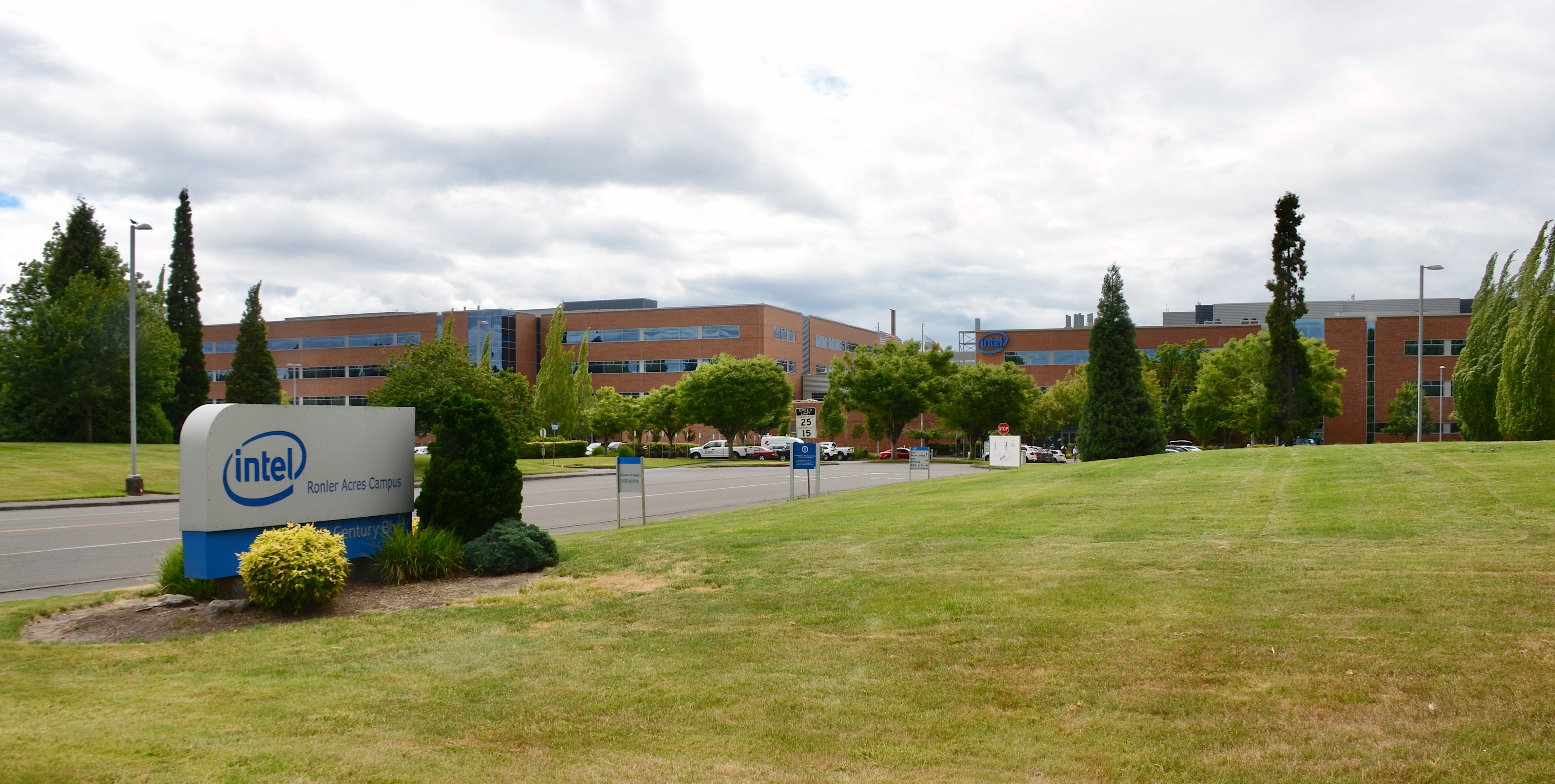
Intel will pour at least $15 billion into artificial intelligence chip production after announcing a massive stock sale Monday, Aug. 10, but the capital raise comes with no announced hiring plans for the company's roughly 16,000 Washington County workers.
The offering lands as Intel's local headcount has fallen from about 23,000 employees as recently as 2024 to 16,000 in mid-2026.
Oregon's semiconductor workforce overall is at a 30-year low, according to OregonLive. A report commissioned by Business Oregon warned the state's chip industry could become "insignificant" globally without new companies and a stronger talent pipeline.
The offering
Intel's SEC filing confirmed a $15 billion underwritten public offering of common stock. At Monday's closing price of $97.52, that translates to approximately 154 million new shares, diluting existing shareholders by about 3.1%. Intel stock fell 4.1% on the news.
Bloomberg reported, citing anonymous sources, that Intel could ultimately target around $20 billion. Underwriters also hold a 30-day option to buy up to $2.25 billion in additional shares, potentially bringing the total to $17.25 billion.
Intel said proceeds will go toward capital expenditures and working capital. The filing identified physical AI, purpose-built silicon, advanced packaging and external wafers as the growth areas driving the spend.
Where the money goes
CFO David Zinsner told CNBC that the bulk of the spending will go to equipping chip plants, with a "meaningful increase" expected in 2027. Intel raised its 2026 capital-expenditure forecast from $18 billion to more than $20 billion. The stock sale covers roughly 75% of that target.
Zinsner said during the company's July 23 earnings call that Intel is supply constrained, with data center customers demanding more chips than it can currently produce.
The offering follows Intel's strongest quarter in 15 years: $16.1 billion in second-quarter revenue, up 25% year over year, with data center and AI segment revenue jumping 59% to $6.3 billion.
Russ Mould, investment director at AJ Bell, told Reuters: "It makes perfect sense for Intel to raise money, especially after a five-fold increase in the stock price since last August."
Broader picture
The U.S. government already holds approximately a 10% equity stake in Intel, acquired by converting $8.9 billion in CHIPS Act and Secure Enclave grants into common stock. Goldman Sachs estimates AI-related capital spending across major tech companies will hit $765 billion in 2026 and $1.2 trillion in 2027.
Intel accumulated roughly $44 billion in negative free cash flow from 2022 through 2025, making equity a more attractive funding source than additional debt.
The offering had not been priced as of Monday evening. J.P. Morgan, Goldman Sachs, Morgan Stanley and Citigroup are managing the sale.