The invasive beetle already killing ash trees in Beaverton has now spread across the Columbia River into Washington state for the first time, officials confirmed on Aug. 20.
A couple walking to their car in South Hazel Dell, a Vancouver neighborhood just north of the Oregon border, spotted the bright green insect on their windshield in early August, captured it and turned it over to state officials for identification.
Washington's Department of Natural Resources confirmed the specimen was an emerald ash borer.
The detection marks a regional escalation of the pest that was first confirmed inside Beaverton city limits in early August, when traps set in spring were checked in July.
Without management, municipalities can expect to lose 90% to 100% of their ash trees within 10 to 12 years of an initial infestation, according to a Washington DNR analysis reported by OPB.
Oregon forestry officials have said the state could lose up to 99% of its ash trees over time.
What Beaverton is doing
Beaverton city arborist and public works supervisor Jered Lane said in an Aug. 6 statement that the city's Urban Forestry team has treated 600 of the roughly 2,000 inventoried ash street trees using grant funding, with plans to protect another 600 soon. Separately, the team treated 22 city-maintained natural area trees 20 inches in diameter or larger in 2026 and planted more than 2,000 native trees and shrubs.
The city has also planted 60 new street trees with volunteers and Friends of Trees.
Washington County has been under a quarantine since 2024 prohibiting the removal of ash, olive and white fringe trees and related materials to slow the pest's spread. Washington state imposed its own firewood quarantine effective Tuesday, Aug. 18, banning untreated firewood from being brought into the state from outside.
What residents should watch for
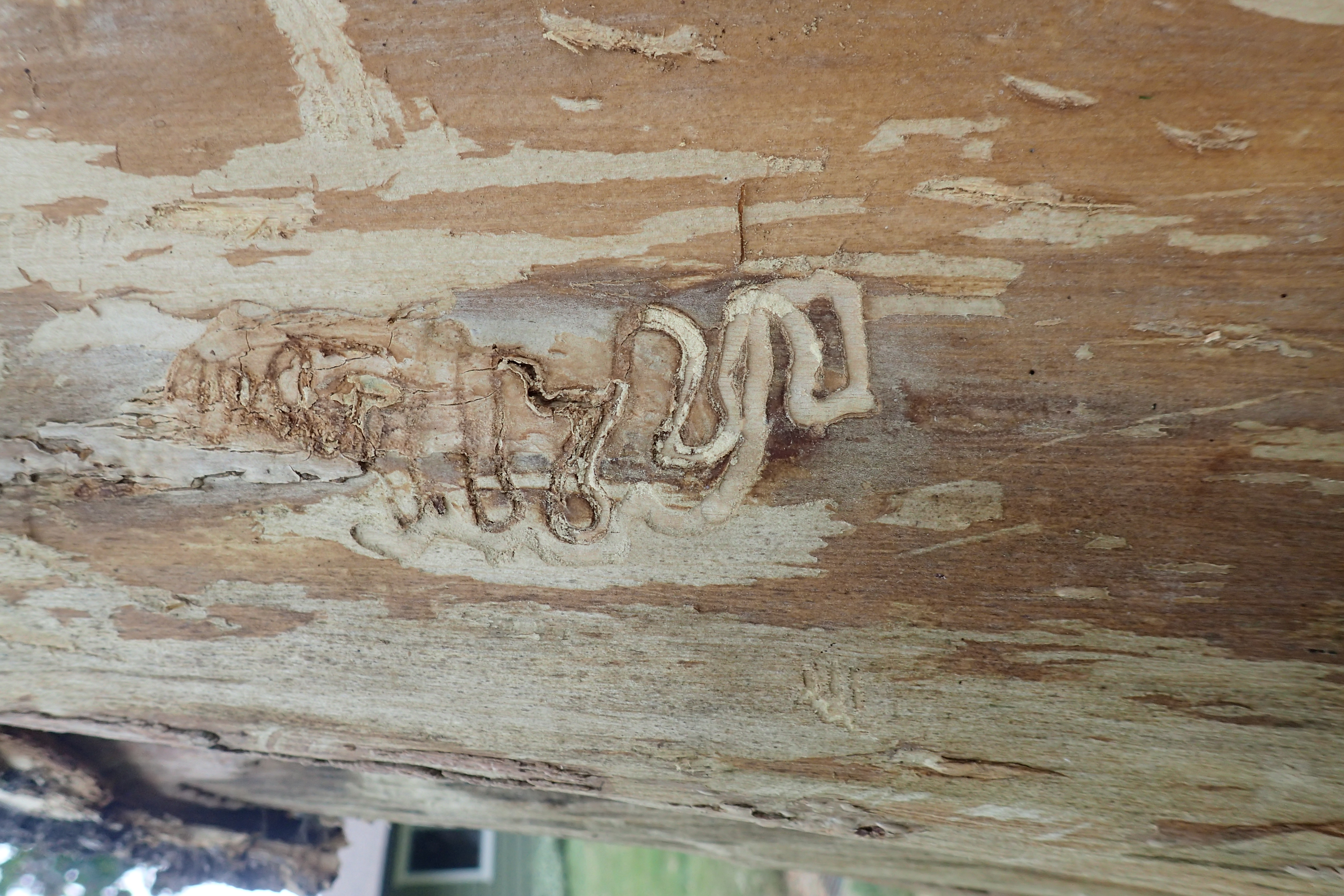
The beetle's larvae burrow beneath bark and disrupt a tree's ability to move water and nutrients. Infested ash trees typically die within two to five years. Signs of infestation include thinning leaves in the upper canopy, peeling bark, S-shaped galleries beneath the bark and D-shaped exit holes about 3 millimeters long.
Adults are active only from June through September.
Oregon residents can report suspected sightings by calling 1-866-INVADER or online at oregoninvasiveshotline.org. The Oregon Department of Forestry maintains an online map of infested areas. Washington residents can report through the Washington Invasive Species Council or the Washington Invasives app.
The city has not announced a date for its next round of 600 street tree treatments.