An invasive beetle that kills 99% of untreated ash trees is spreading through Washington County, and Beaverton's urban forestry crews are racing to protect the city's canopy before the pest arrives in force.
The City of Beaverton's Landscape & Urban Forestry Department posted a warning to the Beaverton Resource Guide on Friday, July 31, urging residents to watch for signs of the Emerald Ash Borer and report suspected infestations.
The metallic-green beetle, about a half-inch long, bores into ash trees as larvae, cutting off water and nutrients until the tree dies.
EAB was first detected in Oregon in 2022 at a school in Forest Grove. Since then it has crept closer to Beaverton. In summer 2025, the Oregon Department of Forestry found EAB in traps near Hazeldale Park, roughly one mile west of city limits, according to ODF's Community Tree Connections newsletter.
In May 2026, ODF Invasive Species Specialist Wyatt Williams confirmed the beetle in King City after peeling back bark from a Raywood ash and finding a fully formed adult ready to emerge.
By June 2026, ODF confirmed EAB in Tualatin, in infested trees about one mile from the ash-lined Tualatin River.
Why it matters here
Oregon ash is the only native ash species in the Pacific Northwest and dominates wetlands and streamside forests across the Tualatin Valley. According to Oregon's EAB Readiness and Response Plan, losing these trees could damage water quality, raise stream temperatures, and threaten ESA-listed species including Upper Willamette River Chinook salmon and steelhead.
There is no known method to eradicate EAB once it establishes. According to ODF, most untreated ash trees die within three to six years of infestation.
Beaverton's response
The city is treating 600 public ash street trees per season with insecticide injections on a three-year cycle, according to the city's EAB information page. The treatment is injected at the base of the trunk and taken up into the canopy, protecting against both adult beetles and larvae.
ODF EAB Support Specialist Matt Mills warned in June 2026 that the metro area may be nearing a tipping point. "Experience from other states shows that four to five years or so after first being detected EAB spreads from pockets of infested ash trees and becomes much more widespread over an entire county or metropolitan area," Mills told KATU. Oregon's first detection was four years ago.
Climate change is compounding the threat. Williams said in May 2026 that the mild winter allowed EAB larvae to develop more rapidly into adults. ODF Forest Entomologist Christine Buhl added that hotter temperatures and drought stress ash trees, making them less able to resist infestation while giving adult beetles more time to find mates and lay eggs.
What residents can do
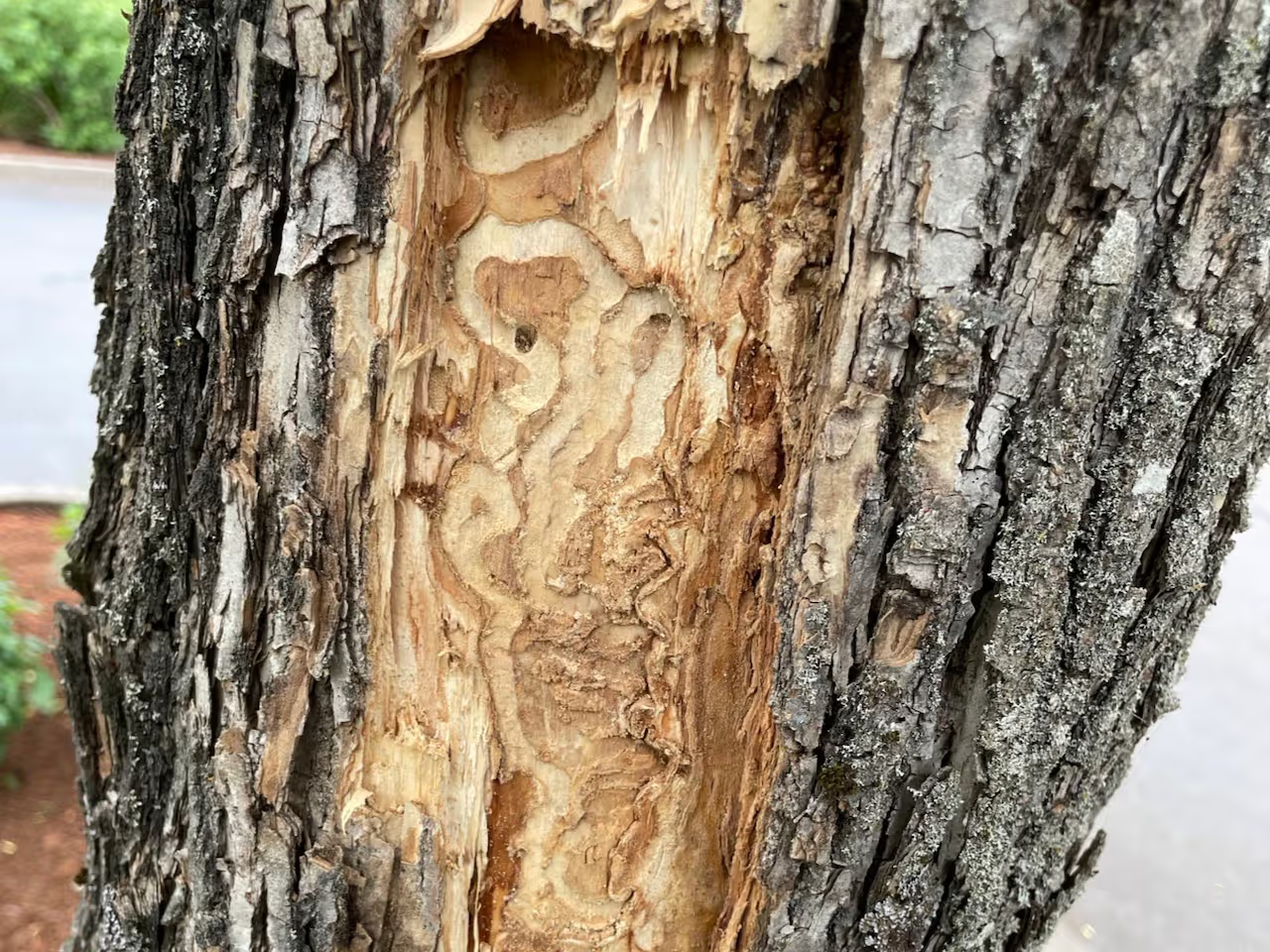
The city asks residents to look for D-shaped exit holes in bark, thinning or yellowing leaves, bark splitting, and shoots sprouting from the trunk. Those who suspect an infestation can call Beaverton Urban Forestry at 503-526-2237 or the Oregon Invasive Species Hotline at 1-866-INVADER. ODF recommends checking identification resources at OregonEAB.com to rule out look-alike insects before reporting.
Washington County falls within Oregon's five-county EAB quarantine zone. Under quarantine rules, residents cannot transport ash wood or any hardwood firewood out of the zone. ODF recommends buying or cutting firewood within 10 miles of where you plan to burn it.