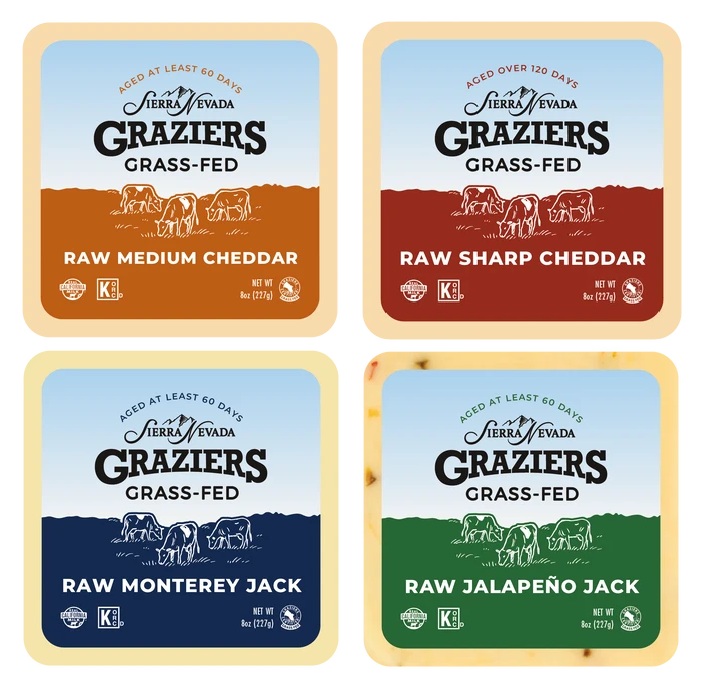
Sierra Nevada Cheese Company has recalled all of its Graziers grass-fed raw milk cheeses after a multistate E. coli outbreak sickened 13 people and hospitalized eight, including one confirmed case in Oregon.
The cheese was sold nationwide and online, meaning Beaverton-area residents who purchased it should check their kitchens.
The recalled varieties are medium cheddar, sharp cheddar, jalapeño jack and Monterey jack, sold in 8-ounce and 16-ounce retail packages.
Larger 5-pound loaves were also sold to delis and cheese counters, where stores may have cut and repackaged them under their own labels.
Every package of all four varieties is covered. There are no safe lot codes or date codes to check.
The U.S. Food and Drug Administration (FDA) announced the outbreak Sept. 25 and urged consumers to check refrigerators and freezers immediately. The Willows, California-based company agreed to the recall Sept. 24 after the FDA notified it of the outbreak.
Oregon is one of nine states with confirmed cases. California and Nevada each reported three. Colorado, Georgia, Kentucky, Michigan, Tennessee and Utah each reported one.
More than half of the 13 people sickened are children age 5 or younger. Ages range from 1 to 58, with a median age of 5. Three patients developed hemolytic uremic syndrome (HUS), a type of kidney failure. No deaths have been reported.
The outbreak strain is Shiga toxin-producing E. coli O26:H11. Illnesses began as early as July 7 and continued through Aug. 26, spanning about seven weeks before the recall. Of nine patients interviewed by public health officials, all nine reported eating Sierra Nevada Graziers cheese in the week before getting sick, according to the U.S. Centers for Disease Control and Prevention (CDC).
The company said in a statement that the reported illnesses have been associated with its medium cheddar product but that it is recalling all Graziers raw milk cheeses because the investigation has not identified a specific lot or date code, as first reported by ABC News. The company's pasteurized cheeses are not part of the recall.
The FDA advises anyone who has the recalled cheese to throw it away or return it for a refund. If cheese was stored without its original packaging and its origin cannot be confirmed, the agency says to discard it. Surfaces and containers that touched the recalled cheese should be cleaned and sanitized.
Bill Marler, a food safety attorney whose firm Marler Clark tracks foodborne illness outbreaks, noted that anyone who bought cut raw milk cheddar or jack from a deli counter and cannot confirm where it came from should treat it as recalled.
E. coli symptoms can appear up to nine days after eating contaminated food. They include severe stomach cramps, diarrhea, fever, nausea and vomiting. Some infections cause severe bloody diarrhea and can lead to HUS.
The CDC says the true number of sick people is likely higher than 13, because many recover without medical care and are never tested. The investigation remains ongoing.
Residents who develop symptoms after eating raw milk cheese should contact a health care provider. The FDA's full recall notice, including updates, is available at fda.gov. The CDC advises families with children under 5 to choose pasteurized dairy products.